
Last school year Seattle Public Schools reported an increase in the number of students attending school under the influence or in possession of marijuana and now the Edmonds School District is reporting the same.
Showing posts with label youth marijuana use. Show all posts
Showing posts with label youth marijuana use. Show all posts
Friday, October 31, 2014

Wednesday, May 21, 2014
Marijuana is not popular
The idea that marijuana is “popular”
and use is “prolific” pops up in many news articles lately. Just this past weekend, the New York Times Magazine
included an article, “The Bud Light-ification of Bud”, that in the beginning
states, “. . . marijuana’s
popularity as a consumer product: 38 percent of Americans admit to having tried
it, and 7 percent use it on a regular basis."
In our state, data readily indicate that marijuana use is not “popular". According to research about the marijuana market, about 10% of Washingtonians 12 years old and older used marijuana within the past month.
Wait, what?
Since when does 7% equal “popular”?
Let’s see how it compares to other “popular”
substances.
Yet, a few times in the article, and in other news stories about marijuana, it is called popular.
- Two-thirds of American adults drink alcohol. Now that’s popular.
- Tobacco, with 18% of American adults smoking, is more popular than marijuana.
Yet, a few times in the article, and in other news stories about marijuana, it is called popular.
In our state, data readily indicate that marijuana use is not “popular". According to research about the marijuana market, about 10% of Washingtonians 12 years old and older used marijuana within the past month.
 |
| Source: RAND Drug Policy Research Center, 2013 |
Even in King County, less than 10% of people 12 and older currently use marijuana. Among 10th grade students, 16% in King County and 23% in Seattle report current marijuana use according to the Healthy Youth Survey.
The perception that marijuana use is “popular" or normal among adults and teenagers is a barrier to youth marijuana use prevention. According to local researchers, perceived peer and adult norms favorable to marijuana use contribute to teenage marijuana use. If teens perceive that adult marijuana use is widespread and socially acceptable (normal), they may view marijuana use as a way to project a desirable adult image.
The perception that marijuana use is “popular" or normal among adults and teenagers is a barrier to youth marijuana use prevention. According to local researchers, perceived peer and adult norms favorable to marijuana use contribute to teenage marijuana use. If teens perceive that adult marijuana use is widespread and socially acceptable (normal), they may view marijuana use as a way to project a desirable adult image.
Thursday, October 18, 2012
More national experts weigh in against marijuana legalization
"Legalizing and normalizing marijuana will be a public health disaster," according to John Walter, Former Director of the White House Office of National Drug Control Policy.
"Marijuana use has been linked to mental illness and violence. Its use also interferes with the cognitive development in adolescents. Marijuana use has significant impacts on our school scores and drop-out rates, accidents and vehicle fatality rates, employment productivity, healthcare and treatment costs, and the potential escalation of further illicit drug use. In fact, more young people are in treatment for marijuana than any other drug," says Calvina Fay, Executive Director of the Drug Free America Foundation.
"Marijuana use has been linked to mental illness and violence. Its use also interferes with the cognitive development in adolescents. Marijuana use has significant impacts on our school scores and drop-out rates, accidents and vehicle fatality rates, employment productivity, healthcare and treatment costs, and the potential escalation of further illicit drug use. In fact, more young people are in treatment for marijuana than any other drug," says Calvina Fay, Executive Director of the Drug Free America Foundation.
Wednesday, October 3, 2012
Child psychiatrist's top ten reasons not to legalize marijuana
When it comes to marijuana policy, Colorado and Washington seem to be fairly similar. Both states have legal medical marijuana industries and both states will vote on full marijuana legalization next month. Therefore, I think a video of Dr. Christian Thurstone, from the University of Colorado at Denver, providing his "Top Ten Reasons Not to Legalize Marijuana" to the Colorado Child and Adolescent Psychiatry Society is pertinent to Washingtonians, as well.
Unfortunately, the video ends just as Dr. Thurstone starts talking about marketing marijuana to youth.
According to the Colorado Child and Adolescent Psychiatry website:
Recently, Colorado has seen staggering increases in adolescent marijuana use. Many parents, teens and teachers are confused about marijuana as both medicine and drug of abuse. Here is a link to materials written by our president, Dr. Thurstone, and the Colorado Department of Education called Understand the Big Deal: How Marijuana Harms Youth. This resource includes a one-page info sheet, a brochure and a slide set. Feel free to make copies and distribute.
Wednesday, September 19, 2012
News Tribune: marijuana legalization bad for juveniles
Earlier this week, the News Tribune published an editorial about I-502: Juvenile marijuana use: the fatal flaw of Initiative 502. Here are a few excerpts:
. . . Legalization would likely produce a surge of dope smoking among teenagers who now avoid it simply because it is stigmatized as illegal.
Kids notice what adults consider acceptable, and not all of them are hell-bent on rebellion. Federal data suggest that most adolescents either avoid alcohol and drugs, or only experiment with them.
. . . Some of that difference can be explained by perceptions of what is legal among their elders. Legality will inevitably make marijuana more attractive to youth. Mere advertising campaigns aren’t likely to counteract that effect – especially since marijuana marketers will be doing their own advertising under I-502.
The initiative also wouldn’t shut down the black market or the drug cartels, as its supporters hope. For example, sales would still be forbidden to those under 21 – but does anyone believe that dealers will stop selling to them?
There may be ways to legalize or decriminalize marijuana for adults without creating a wider snare for juveniles. It would be nice if I-502 could do that. It’s likely to have just the opposite effect.
Wednesday, September 12, 2012
Legalizing marijuana candy & cookies
Marijuana-infused products provide a perfect example of why marijuana policy is more complicated than the "regulate it like alcohol" slogan. If marijuana is legalized, all marijuana products -- not just smoked marijuana -- will be manufactured and sold. Products likely would include candy, cookies, and beverages that appeal to youth.
Below are just a few marijuana-infused products that are already produced.


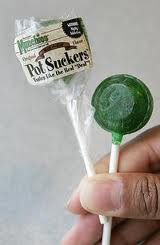

Year in and year out, youth substance abuse prevention advocates run into stiff opposition when advocating for the tight regulation of tobacco and alcohol products that appeal to youth. When advocates are successful, manufactures often find ways to skirt new policies. Legalizing another drug that is harmful to youth would establish a whole new industry that will need to be constantly monitored. A whole new industry that will act no differently than the tobacco and alcohol industries and market products to youth.
Wednesday, August 15, 2012
Study: "Cannabis is harmful to the developing brain"
According to a press release from the Murdoch Childrens Research Institute:
Long term, heavy cannabis use is harmful to the developing brain, according to new research conducted at the Murdoch Childrens Research Institute.
Tuesday, July 31, 2012
Addiction medicine physicians oppose state marijuana initiatives
Yesterday, the American Society for Addiction Medicine, the country's foremost association of physicians who diagnose and treat substance abuse addiction, released a statement opposing all of the state ballots that propose to legalize marijuana.
From their statement:
From their statement:
ASAM asserts that the significant public health problems and costs related to marijuana legalization are not well-understood by the public or policymakers. ASAM's conclusion that marijuana legalization would threaten public health is based on the following:
·
Marijuana use is neither safe nor
harmless. Marijuana contains psychoactive cannabinoids which can produce a
sense of discomfort and even paranoid thoughts in some users. Cannabinoids
interact with brain circuits in comparable ways to opioids, cocaine and other
addictive drugs. Marijuana use is associated with damage to specific organs and
tissues and impairments to behavioral and brain functioning.
·
Of greatest concern is marijuana use
during adolescence—a time of ongoing brain development and heightened
vulnerability to addiction. Research shows that heavy marijuana use decreases
neurocognitive performance, with worse neurocognitive effects seen among those
who begin marijuana use early.
·
Marijuana is addictive. Repeated
marijuana use is reinforcing because the drug increases activation of reward
circuitry in the brain. Approximately 9% of people who try marijuana become
dependent. For those who begin using the drug in their teens, approximately 17%
become dependent. These figures are similar to alcohol dependence.
·
Legalization would promote the
public perception that marijuana is harmless at the same time that availability
of the drug would grow exponentially. The rate of marijuana use and
marijuana-related substance use disorders, including addiction, would increase.
·
Increased marijuana addiction would
heighten demand for substance use disorder treatment services, which already
are inadequate for current needs.
·
Marijuana use is associated with
increased rates, and worsening symptoms, of psychosis. Increased marijuana use
caused by legalization and increased access to high-potency marijuana could
result in rising rates of psychotic illnesses.
·
Marijuana-related crashes are major
traffic safety threats; marijuana use doubles the risk of a crash. Research
inWashington State showed that 12% of drivers killed in car crashes were
positive for marijuana. Legalization would increase drugged driving.
Monday, July 2, 2012
Youth access to marijuana would increase if legalized
A pro-marijuana legalization billboard in Colorado shows a boy with his father who is saying, “Please check my son’s ID”. The message is that if marijuana is sold in stores youth access to it will decrease because stores won’t sell to minors. While in theory this sounds great, it’s just not true. If we treat marijuana like alcohol, youth access will increase. Most kids who drink do not get alcohol by buying it at a store and the same would be true for marijuana.
Alcohol is easy for teens to get because older friends and siblings can buy it for them legally. The top three ways teenagers get alcohol is from friends, at a party, or by giving someone money to buy it for them (Washington State Healthy Youth Survey -- HYS). If marijuana is treated like alcohol, teens will just as easily get marijuana as they get alcohol from older friends and siblings. Though teenagers currently say that marijuana is as easy to get as alcohol, they use legal and regulated alcohol at much higher rates than they use marijuana (HYS).
Like alcohol, youth will get marijuana at home. Washington tenth graders report that they are more likely to get alcohol from home with or without parents’ permission than from buying it from store (HYS). With the demise of legal sanctions against use, some parents may choose to begin using marijuana, acting as an important new source of exposure for their adolescents. Parental use of marijuana in the last year is associated with their adolescent’s use during the same period (Legalization of Marijuana: Potential Impact on Youth, American Academy of Pediatrics).
Find out more at WASAVP's Marijuana Education Toolkit.
Subscribe to:
Posts (Atom)